Java Introduction
Java is one of the most popular programming languages in the world introduced in 1995, It was introduced by Sun Microsystems. Programming language is a set of instruction and commands used to communicate with machines. It translates human-readable code into machine code (binary) so that computers can perform specific tasks.
It is widely used for building enterprise applications, Android apps, and backend systems.
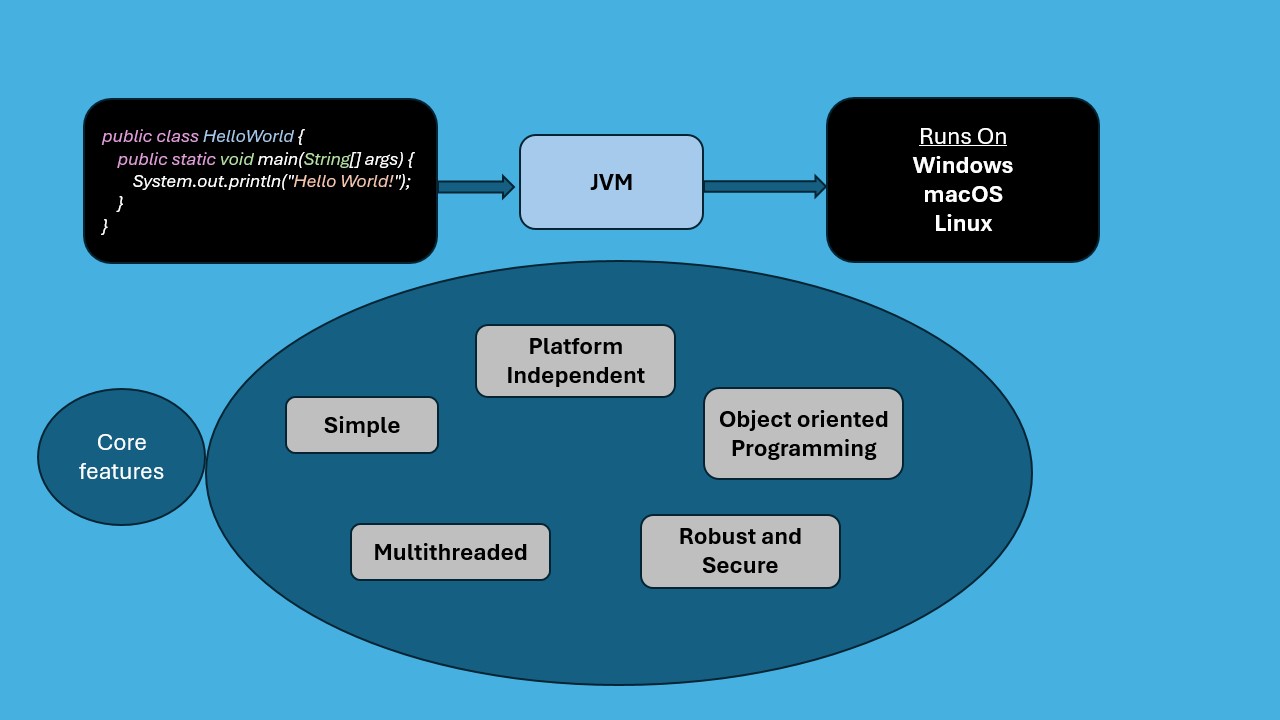
The main key features of Java:
Simple - Java provides structured and readable syntax, making it easier or beginner-friendly for new developers to write and understand code.
Platform Independent (Write Once, Run Anywhere) - Java code can be easily transferred and run across different operating systems like Windows, macOS, and Linux without rewriting the code.
Object-Oriented Programming (OOP) - It organizes code into reusable parts called objects, making it easier to scale and maintain.
Robust and Secure - Java uses automatic garbage collection which reduces memory leaks and crashes. Java code runs inside the JVM which restricts unauthorized access to memory.
Multithreaded - It has built-in capabilities for multithreading, that is it can create, run and manage multiple threads. Which helps to perform or execute multiple tasks simultaneously.
See you in next page....🙂